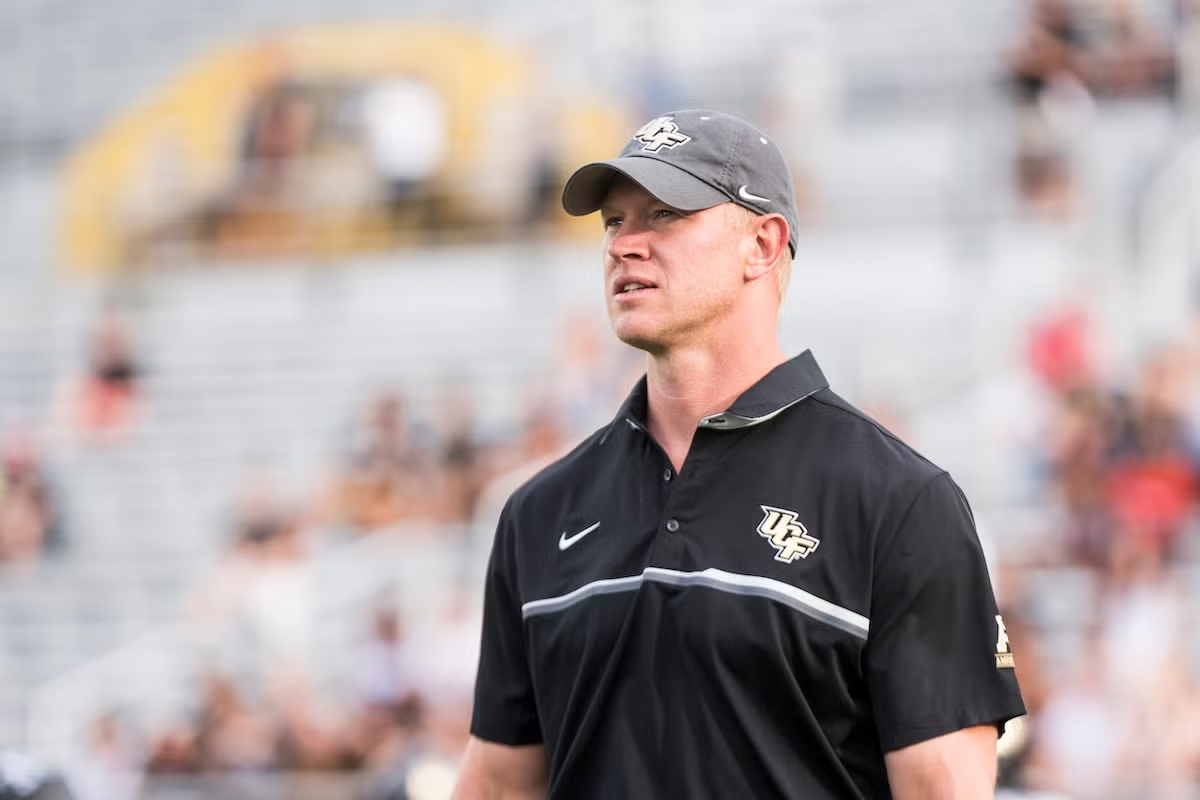
The wait is over. The UCF quarterback battle update has arrived, and Scott Frost has made it official that Cam Fancher will take the first snaps in the 2025 opener against Jacksonville State. The decision comes after months of speculation and competition, and while Frost showed confidence in all three quarterbacks on the roster, his choice to roll with Fancher sets the tone for the season.
Quarterback Decision and Leadership
Naming Fancher as the starter signals a desire for stability at the most critical position. Frost praised his leadership, command of the offense, and ability to turn broken plays into positive gains. At the same time, he avoided locking himself into absolutes by leaving the door open for others if needed. That balance matters. It gives Fancher confidence while still reminding everyone that performance dictates future decisions.
The skill set that separates Fancher is his ability to play within the structure of the offense, but still create when things break down. He is not a run-first quarterback, but he can extend plays with his legs when necessary. That makes him a true dual-threat option. Frost’s comment about not wanting to single out one player too much also suggests he wants to let Fancher earn his respect in live action. Week one will be his opportunity to take ownership of the job and quiet the questions surrounding the quarterback competition.
Frost’s Confidence and Team Identity
Beyond the quarterback decision, Frost’s confidence in his team was evident throughout the press conference. He emphasized preparation, tempo, and discipline as the pillars of UCF’s approach. He acknowledged that mistakes will happen in the opener, but he expects effort and focus to carry the Knights through. His phrase that players do not rise to the occasion but instead fall to the level of their training sums up the mindset he wants to instill.
Tempo is going to define this team. Frost aims to dictate the pace of the game by utilizing mismatches and fatigue. That style directly challenges Jacksonville State’s defensive philosophy, which is built on structure and discipline. The contrast makes for an intriguing opening matchup. The tempo-heavy attack can frustrate disciplined defenses if executed properly, and Frost appears determined to lean into that advantage.
His confidence also extended to the offensive line. When asked about whether Paul Rubelt would move positions to adjust to Fancher’s left-handed throwing style, Frost firmly rejected the idea. He insisted that line chemistry and continuity are more important than making preemptive adjustments. That decision reflects a commitment to trust the players who won their positions during camp rather than create unnecessary disruption. Offensive line play is built on cohesion, and Frost’s refusal to shuffle unnecessarily shows he understands how critical stability will be.

Readiness and Buy-In
Frost was asked about first game readiness, and his answer revealed how much he values culture as much as execution. He wants his team to attack, play without fear, and remain disciplined even when making early mistakes. His focus on effort highlights the mental approach he is trying to build. Football is physical, but the psychological edge often determines outcomes, especially in season openers.
Another key theme was player buy-in. Frost credited his players for progress from spring ball to fall camp, but he stressed that improvement cannot stop there. Complacency is the enemy of progress, and he expects his team to continue developing throughout the season. He also referenced “culture keepers” in the locker room who help ensure the rest of the roster embraces the system. That internal leadership matters as much as coaching in building a program that sustains itself.

The mention of recruits like Kane Archer shows that the energy around UCF extends beyond the current roster. Even with the controversy of his star rating being reduced, prospects like him see something in what Frost is building and want to be part of it. The external perception of UCF is shifting, which reflects the buy-in happening within the program.
Leadership at quarterback remains the final piece. Frost avoided directly answering whether the locker room gravitated toward Fancher, which was the right move. Division in a locker room over quarterback preference can derail a season before it begins. His choice to sidestep that question was wise because nothing good would come from singling out a favorite beyond what he has already said. Winning games is the only way to settle that discussion. If Fancher plays well, teammates will naturally follow.
The combination of discipline, tempo, confidence, and buy-in makes this season feel like the start of something new. The fanbase appears more measured than in past years, with less obsession over perfection and more interest in growth. That relaxed yet optimistic atmosphere can benefit the team, taking away some of the pressure and allowing the players to focus on execution.
The UCF quarterback battle update is more than just naming a starter. It is a window into how Frost intends to build his program. Stability at quarterback, confidence in preparation, trust in chemistry, and emphasis on culture are the foundation he is laying down. Jacksonville State will be the first test, but the themes emerging already suggest UCF is moving in the right direction.
Social Links:
Follow Locked On UCF on X
Follow Locked On UCF on Instagram